
Call us now :08045801408
 Send Inquiry
 Send Inquiry
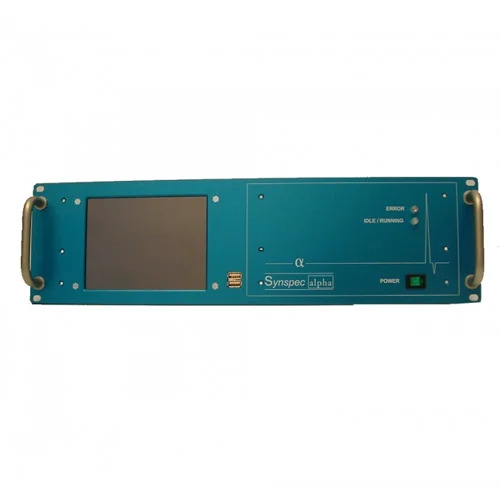
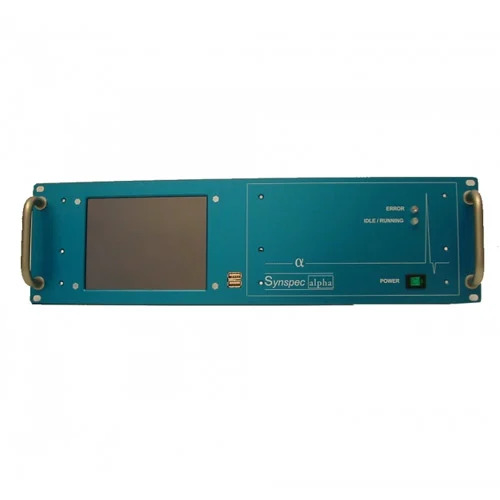
Benzene Gas Analyzer
MOQ : 1 Piece
Benzene Gas Analyzer Specification
- Air Flow
- Gas stream required 25 ml/min
- Measurement
- Benzene concentration, 0 - 100 ppb
- Usage & Applications
- Benzene detection & analysis
- Power Source
- AC
- Orientation
- Rack-mounted
- Sensor Type
- PID
- Display Type
- 6 full colour LCD
- Instruments Type
- Gas Analyzer
- Product Type
- Gas Analyzer
- Material
- Steel
- Processing Time
- Cycle: 10 min
- Voltage
- 220 Volt (v)
- Weight
- 12 Kgs
- Dimension (L*W*H)
- 19 rack, 3 standard Height Units, depth 37.2 cm
- Pre-concentration trap
- Yes
- Consumption of gas
- Nitrogen 5.0, 3.0 bar
- Easy calibration
- Yes
- Detector
- PID Levels: 0.15 ppb
- Compact design
- Yes
- GC specification
- Special application GC column
- Range
- 0 - 100 ppb PID
- Calibration
- Internal switch, zero and span
- Included software
- Windows XPe, GC software
- Included hardware
- Computer, hard disk, LCD
- EMC conformity
- EN 61010-1, 61000-6-2
- Port valve
- 10 port Synspec valve
- Communication
- Control via screen, keyboard
- External accessories
- Keyboard and mouse
Benzene Gas Analyzer Trade Information
- Minimum Order Quantity
- 1 Piece
- Supply Ability
- 4 Pieces Per Week
- Delivery Time
- 1 Week
- Certifications
- Yes
About Benzene Gas Analyzer
Over the years of dedication, we have been a noted manufacturer of Benzene Gas Analyzer to our huge clientele base. We sturdily build it using finest of material and latest machinery at our unit in conformity with the global industrial standards and norms. Benzene Gas Analyzer hence stands high on quality, performance, effectiveness, efficiency, corrosion resistance, easy installation and has a long operational life. This has gained us all the more rising demands from national as well as international clients.
Key Points:
- The synspec Aplha 400 benzene Analyzer is a very simple but precise benzene only Analyser.
- Range: 1-50 ug/m3
- It is compact GC containing all the essential elements viz preconcentration sampling unit backflush valve separation column in special samll oven unit and a PID detector.
- The gas sample is concentrated in a TRAP. The sample is then desorbed and injected over the valve into a column and benzene passes on to the detector. The system is optimized for ambient benzene concentrations.
- All higher boiling hydrocarbons will be BACKFLUSHED. This givves two advantages to the system: auto cleaning every cycle and that a very short cycle (for benzene standard 10 minutes). The system is adapted to the specific hydrocarbon that must be monitored with regards to the essential parameters: column, flow temperature and backflush setting. The OVEN is isothermal
High-Sensitivity Benzene Detection
This analyzer provides sensitive detection of benzene with a PID sensor capable of measuring as low as 0.15 ppb. Its wide 0-100 ppb range is ideal for environmental monitoring, workplace safety, and industrial hygiene applications where accurate benzene quantification is essential.
User-Friendly Operation and Calibration
Featuring internal switch-operated zero and span calibration, the instrument simplifies regular maintenance. The control interface, accessible via an included LCD, keyboard, and mouse, ensures efficient operation. The system's easy calibration reduces downtime and operator intervention.
Robust Design and Compliance
Built with a steel enclosure and designed for rack-mounting, the analyzer offers durability and space efficiency. It operates at 220V AC and weighs 12 kg. EMC conformity (EN 61010-1, 61000-6-2) and nitrogen flow requirements make it suitable for demanding laboratory and industrial settings.
FAQ's of Benzene Gas Analyzer:
Q: How does the Benzene Gas Analyzer detect and measure benzene concentrations?
A: This analyzer uses a Photo Ionization Detector (PID) sensor to identify and measure airborne benzene within a range of 0 to 100 ppb. The PID provides high sensitivity with a detection limit as low as 0.15 ppb, ensuring precise environmental monitoring.Q: What is the calibration process for this instrument and how often should it be performed?
A: Calibration is straightforward using the internal switch for zero and span adjustments. The process can be initiated from the device's control interface. Regular calibration intervals depend on application and regulations but performing it monthly ensures sustained accuracy.Q: When is this benzene analyzer typically used or most beneficial?
A: It is most beneficial in laboratories, industrial environments, and workplaces where benzene detection is critical for compliance, safety, and process control. It helps detect trace levels of benzene to safeguard health and ensure regulatory standards are met.Q: Where should the analyzer be installed for optimal performance?
A: The device is designed for rack-mounted installations in laboratories or controlled industrial spaces. It requires connection to a nitrogen gas source (5.0 purity, 3.0 bar), with an air flow of 25 ml/min, ensuring reliable and stable measurements.Q: What is the usage process for running a benzene analysis cycle?
A: To run an analysis, the operator starts the system via the included LCD or keyboard. A sample is processed through a special application GC column and pre-concentration trap before detection. The cycle time is 10 minutes per sample, with results displayed on the color LCD.Q: How does the instrument's design benefit users in terms of space and operation?
A: Its compact, rack-mountable form, lightweight 12 kg build, and integrated computer with LCD allow for efficient use of laboratory space and streamlined operation. The straightforward hardware and software setup further enhance usability and deployment.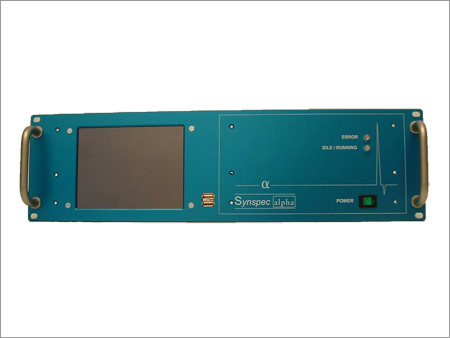
Tell us about your requirement

Price:
Quantity
Select Unit
- 50
- 100
- 200
- 250
- 500
- 1000+
Additional detail
Mobile number
Email


 Send Inquiry
Our Products

A-271, Okhla Industrial Area, Phase-I,New Delhi - 110020, India

Mr Chetan Garg
(Director-Sales)
Mobile :08045801408
 Send Inquiry
 Send SMS
Developed and Managed by Infocom Network Private Limited.


