
Call us now :08045801408
 Send Inquiry
 Send Inquiry
Ultrafine Particulate PM1 Sampler
Price 136000 INR/ Piece
MOQ : 1 Piece
Ultrafine Particulate PM1 Sampler Specification
- Usage & Applications
- Ambient Air Quality Monitoring, Environmental Studies, Research Labs
- Measurement
- PM1 Particulate Concentration (g/m3)
- Power Source
- Electric Mains
- Automation Grade
- Semi-Automatic
- Air Flow
- 1.0 m3/hr (Adjustable)
- Instruments Type
- PM1 Sampler
- Display Type
- Digital Timer Display
- Sensor Type
- Gravimetric Filter Based
- Temperature
- Operating Range 5C to 45C
- Orientation
- Vertical
- Efficiency
- Over 99% for PM1 Size Fraction
- Product Type
- Particulate Sampler
- Material
- Steel
- Cooling System
- Air Cooling
- Noise Level
- Low (<55 dB)
- Processing Time
- 24 hours continuous sampling
- Capacity
- High Volume Air Sampling
- Voltage
- 220 Volt (v)
- Weight
- Approx. 32 kg
- Dimension (L*W*H)
- 410 mm x 270 mm x 670 mm
- Surface
- Powder Coated
- Sampling Head
- Size Selective Inlet for PM1
- Sample Collection Method
- Filter Gravimetric
- Sample Mounting
- Cartridge Type Filter Holder
- Mobility
- Portable with Carry Handle
- Timer Control
- Programmable Timer for Start/Stop
- Data Output
- Manual Data Recording
- Power Consumption
- ~250W
- Protection Features
- Overload and Short Circuit Protection
- Filter Media
- PTFE or Glass Fiber Filter
- Vacuum Pump
- Oilless Rotary Pump, Built-in
Ultrafine Particulate PM1 Sampler Trade Information
- Minimum Order Quantity
- 1 Piece
- Delivery Time
- 1 Week
About Ultrafine Particulate PM1 Sampler
The APM577M is a manual method for sampling very fine sub-micron particulates (PM1 fraction). This sampler is based on impactor design standardized by Indian Institute of Technology, Kanpur.
The air enters in the system through an omni-directional inlet designed to provide a clean, aerodynamic cut point for particles. The air sample & fine particulates exiting from the PM1 impactor are passed through a 47 mm diameter PTFE filter membrane that retains the sub-micron PM1 dust.
The sampling rate of the system is held constant at 10 LPM by a suitable critical orifice. A dry gas meter is incorporated to provide a direct measure of the total air volume sampled. Time totalizer provides information on actual run time of sampling. An electronic timer is also provided to start the sampling and shut off the sampler as per requirement of the sampling, thus eliminating the need of presence of man power at site.
Precision Sampling for Research and Monitoring
Utilize the PM1 Sampler for high-efficiency collection of ultrafine particulates in diverse environments. Its advanced size-selective inlet and adjustable air flow (1.0 m3/hr) enable accurate, consistent sampling crucial for compliance, health research, and air quality analysis.
Designed for Portability and Ease of Use
Engineered to be mobile with a convenient carry handle and compact dimensions, the PM1 Sampler is suitable for indoor or outdoor deployments. Simple manual data recording and digital timer display streamline operation, making it accessible for field technicians and researchers alike.
Reliable, Safe, and Durable Operation
Built from powder-coated steel, this sampler features robust overload and short circuit protection, air-cooled operation, and a low-noise vacuum pump. The semi-automatic system enhances safety and operational reliability for all-day sampling in variable conditions.
FAQ's of Ultrafine Particulate PM1 Sampler:
Q: How does the Ultrafine Particulate PM1 Sampler collect samples?
A: The PM1 Sampler collects airborne ultrafine particulates using a size-selective inlet and gravimetric filter-based method. Air is drawn through PTFE or glass fiber filters by an oilless rotary vacuum pump, which captures particles 1 micron for precise measurement.Q: What environments and applications is this sampler suitable for?
A: This sampler is ideal for ambient air quality monitoring, environmental studies, and research laboratory settings. Its portability and high efficiency make it suitable for indoor and outdoor locations, especially where accurate PM1 data are critical.Q: When should I use the programmable timer feature?
A: The programmable digital timer should be used when you require automated sampling start and stop for up to 24 continuous hours. This is especially useful for compliance monitoring and time-sensitive research projects that demand sampling at specific intervals.Q: Where can the collected data be accessed and recorded?
A: Data from the PM1 Sampler are manually recorded. After sampling, operators retrieve and weigh the filter to determine particulate concentration, documenting results as required for analysis or reporting.Q: What is the maintenance process for this sampler?
A: Routine maintenance includes replacing or cleaning filters after each sampling session, inspecting the oilless rotary vacuum pump, and checking for any blockages or signs of wear. Ensure the cartridge type filter holder is properly installed for optimal operation.Q: How does the sampler benefit environmental monitoring?
A: With over 99% efficiency in PM1 fraction collection and a low noise level, this sampler provides reliable, high-quality data. Its portability and semi-automatic features allow for flexible deployment, enhancing environmental and regulatory monitoring capabilities.Q: What protective features does the PM1 Sampler offer during operation?
A: The sampler is equipped with built-in overload and short circuit protection, air cooling, and robust steel housing. These safety measures ensure uninterrupted, safe operation, even during extended 24-hour sampling runs.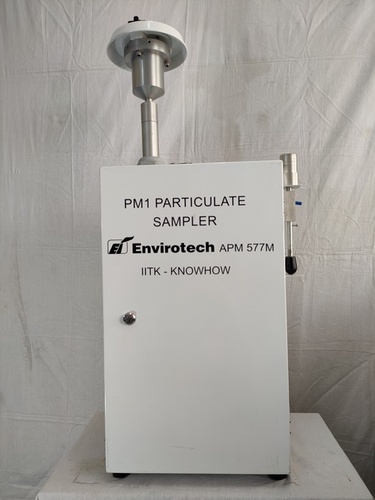
Tell us about your requirement

Price:
Quantity
Select Unit
- 50
- 100
- 200
- 250
- 500
- 1000+
Additional detail
Mobile number
Email


 Send Inquiry
Our Products

A-271, Okhla Industrial Area, Phase-I,New Delhi - 110020, India

Mr Chetan Garg
(Director-Sales)
Mobile :08045801408
 Send Inquiry
 Send SMS
Developed and Managed by Infocom Network Private Limited.


